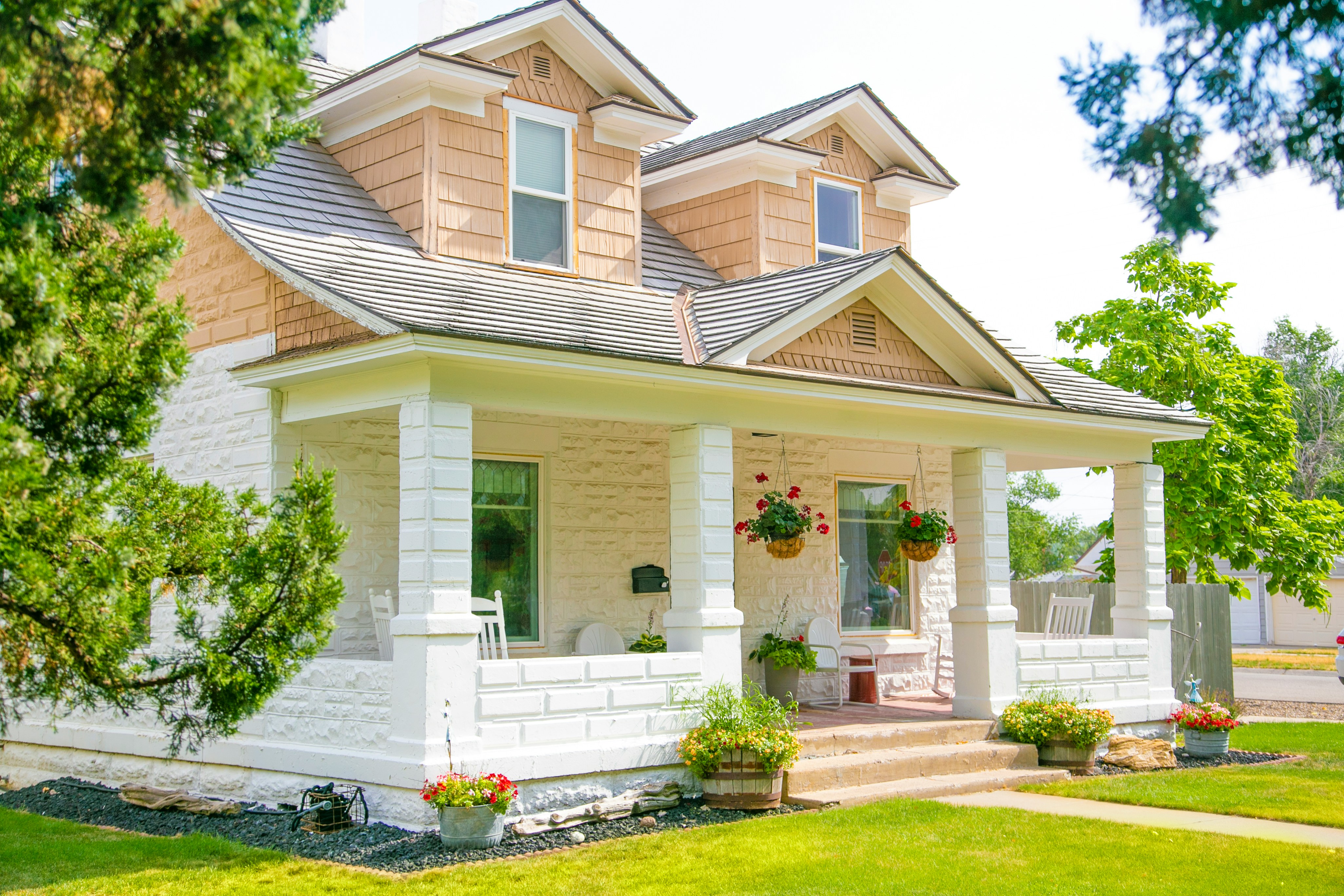
In Zonda's 38th annual Cost vs. Value report, cheap exterior work scored highest and large interior projects lowest: garage door replacement 267.7% of cost recouped against 18% for an upscale primary suite addition. Both figures are national estimates from a survey of over 6,000 agents, not measured sale prices.
Every guide to preparing a home says declutter, clean and paint. That advice is right, and it comes with no numbers, which makes it impossible to act on when you are standing in your kitchen deciding whether to spend twenty-eight thousand dollars on it.
So this article is only about the money. What prep costs, what the research says comes back, and where the figure sellers hear most often actually comes from, because once you know that you will read it very differently.
Written by Saleh Ihmoud, REALTOR®. Missouri license #2025005964, sponsored by Elevate Realty, 16141 Swingley Ridge Rd #201, Chesterfield, MO 63017. Illinois license #475.218785, sponsored by Elevate Illinois Realty, 6 Ginger Creek Village Drive, Suite A, Glen Carbon, IL 62034. Equal Housing Opportunity. This article is general education. It is not legal, tax, construction, appraisal or valuation advice, and it is not a recommendation about any specific property.
What does preparing a home actually pay back?
The short version: in the published research, cheap exterior work scores highest and expensive interior work scores lowest. The gap between the two ends is not small, and it is the single most useful thing in this article.
The rest is the evidence, the caveats, and the part of the job the surveys do not price at all.
The figure sellers hear most often, and where it comes from
Somebody will tell you a new garage door returns 267.7% of its cost. That figure is real and it comes from a real study, and it does not mean what most people assume.
It is from Zonda's 38th annual Cost vs. Value Report, published September 18, 2025. These are national averages across local markets nationwide, not St. Louis figures, and the costs are survey averages rather than quotes from anyone who would actually do your work.
| Highest scoring projects | Average cost | Cost recouped |
|---|---|---|
| Garage door replacement | $4,672 | 267.7% |
| Entry door replacement, steel | $2,435 | 216.4% |
| Manufactured stone veneer | $11,702 | 207.9% |
| Siding replacement, fiber-cement | $21,485 | 113.7% |
| Minor kitchen remodel, midrange | $28,458 | 112.9% |
| Siding replacement, vinyl | $17,950 | 96.5% |
| Backup power generator | $13,534 | 95.3% |
| Deck addition, wood | $18,263 | 94.9% |
Almost every article stops there, at the flattering end of a 28 project list. Here is the other end, which is the half that actually makes the argument.
| Lowest scoring projects | Average cost | Cost recouped |
|---|---|---|
| Primary suite addition, upscale | $351,613 | 18% |
| Solar power installation | $55,937 | 30% |
| Primary suite addition, midrange | $170,517 | 32% |
That is the whole thesis in two tables. The cheapest project on the list scores fifteen times better than the most expensive one.
Read that report the way its own methodology asks you to
The "value" half of cost versus value is not measured from completed sales. The report's published methodology says how it is produced:
"Resale value data for each project was aggregated from estimates provided by an online survey conducted by Zonda to over 6,000 Realtors working in cooperation with the Realtors Property Resource (RPR) of the National Association of Realtors."
Respondents were shown descriptions, photographs, construction costs and median home prices, and asked to estimate what each project would add. So the value side is a large, informed survey of real estate agents, not a measurement of what buyers paid. The cost side is separately estimated from Bureau of Labor Statistics price indexes and regional data from Verisk's XactRemodel.
That does not make the report useless. Six thousand agents watching buyer reactions is real signal, and their instinct about curb appeal is worth something. It does mean the number is a professional estimate with a decimal point on it. Budget against a contractor's bid, not against a survey.
Zonda's own editor, Clay DeKorne, offers two explanations for why exteriors win, and it is worth having both rather than the convenient one. The outcome, he writes, is "partly based on values defined by real-estate professionals, who tend to place high value on a home's curb appeal when establishing a home's selling price, and partly on the lower labor costs for exterior replacement projects, which are far less skill-intensive than complex interior kitchen and bath remodels and additions."
One more definition, because it trips people up. "Cost recouped" above 100% does not mean you profit by doing the work. It compares estimated added value against estimated cost at the moment of sale. It says nothing about whether the home would have sold anyway. What a specific improvement adds to a specific property is an appraiser's question, not a survey's.
What the staging research says, and what it does not
Staging gets discussed as either magic or a racket. The National Association of REALTORS surveys its members on it, and the 2025 Profile of Home Staging, published May 6, 2025, is more modest than either camp.
| Finding | Who was asked | Figure |
|---|---|---|
| Staging had an effect on some buyers but not always | Buyers' agents | 60% |
| Saw a 1% to 10% increase in the dollar value offered on their sellers' homes | Sellers' agents | 29% |
| Observed that staging reduced time on market | Sellers' agents | 49% |
| Median cost, professional staging service | n/a | $1,500 |
| Median cost when the agent staged it | n/a | $500 |
And I have to apply the same test to this that I just applied to Zonda, or the last section was dishonest. The NAR staging report is also a survey of agents, run by the trade association those agents belong to, and it contains no transaction data either. Roughly three in ten sellers' agents reported a price effect, which means roughly seven in ten did not. That is a modest, believable finding at a median professional cost of $1,500, and it is not proof that staging adds money to your sale.
The same report ranks which rooms buyers' agents considered most important to stage: living room 37%, primary bedroom 34%, kitchen 23%. If the budget covers one room, that order is the answer.
The work nobody surveys, and why it is first
No study prices the thing that costs the most when it is skipped, because it is not a purchasable project.
A buyer's first contact with your home is a set of photographs on a phone, and those photographs decide whether a showing is ever booked. Decluttering, deep cleaning and fixing small visible faults cost close to nothing and they are what the photographs are made of. No garage door rescues a listing nobody opened.
So rather than another to-do list, here is the same decision arranged by what it costs. My preparing your home page covers the order to do the work in; this is the order to spend in.
| Budget | Where it goes | Why here |
|---|---|---|
| Nothing but time | Declutter, clear surfaces, clean thoroughly, replace dead bulbs, fix the sticking door | Changes every photograph. Nothing else on this list has that reach per dollar |
| Under $500 | Professional photography if it is not already included, a deep clean, a storage unit for a month | The top of the funnel. Everything downstream depends on a showing happening |
| Under $2,000 | Paint only where it is actually needed. Staging if the home is empty or the furniture fights the room | The NAR median staging bill sits here, and the research supports a modest effect |
| Four figures and up | Cheap exterior items first, per the survey data. Then anything mechanical a buyer's inspector will find anyway | Exteriors score highest in the report and the reasons include lower labor cost, not just agent opinion |
| Do not go here to sell | Additions, primary suites, solar, gut remodels | 18% to 32% recouped in the same report. This is the evidence, not an opinion |
Get bids before you commit to anything in the bottom two rows. The dollar figures in this article are national survey averages, not quotes, and a licensed contractor pricing your actual house is the only number that binds. A pre-listing inspection is also worth considering if you suspect something mechanical, because finding it yourself is cheaper than finding it during a buyer's inspection period.
The local item that changes your schedule
Most prep advice is written nationally and misses the thing in this metro that can move your dates.
Many municipalities here require an occupancy or point-of-sale inspection, and the rules differ from town to town on both sides of the river. In the City of St. Louis, "a Certificate of Inspection must be obtained before occupancy of the unit is permitted" for residential sales. The city's own page gives the timing that matters for planning: "The earliest your inspection may be scheduled is 3 business days from the day you apply. The latest your inspection may be scheduled is 15 days from the application day." A standard application is $120, and it is $200 where a unit is occupied without a current certificate.
On the Illinois side the picture is genuinely mixed. Some Metro East municipalities require an inspection tied to a sale or a change of occupancy and some do not, which is why a rule you heard in one town is not advice about the next one.
The point for prep is scheduling, not repairs. Which municipality your home sits in, whether it requires anything, and who applies are questions to settle before you plan the work, because the answer can add weeks. I have written up how these inspections fit into the transaction, city by city, in my step by step guide to selling a house in St. Louis.
If you are selling a condo or a townhouse
The prep problem is different and the local data shows why. In the St. Louis REALTORS July 2026 monthly housing report, built on MARIS data across "the St. Louis REALTORS service area," townhouses and condos took 51 days to sell against 23 for single family homes, with 3.8 months of supply against 2.6.
A slower segment with more competing supply means presentation carries more of the load. It also means the interior is nearly the whole job, because you do not control the roof, the siding or the landscaping. Every high-scoring project in the national table is somebody else's decision. Put the budget inside.
One caution on budget scale. The staging and remodeling figures above are national medians, and the local single family median sale price was $350,000 in that same report while townhouses and condos were $227,000. A $1,500 staging bill is a different proposition against each. Scale the spend to the home, not to the survey.
What not to do before you list
| Do not | Why |
|---|---|
| Add a room or a primary suite for resale | 18% to 32% cost recouped in the 2025 report. The worst scores on the list by a wide margin |
| Install solar to sell | 30% recouped nationally. A reasonable choice for your own energy bill, a poor one as a resale move |
| Gut a kitchen or bathroom | The minor midrange kitchen remodel scores 112.9%. The large discretionary version does not appear anywhere near it |
| Replace mechanicals that still work | A functioning older water heater is something to disclose and price for, not something you are required to buy |
| Start work you cannot finish before photos | A half-done project reads worse than the original condition |
| Assume a repair removes the need to mention it | Disclosure obligations differ between Missouri and Illinois and turn on facts. Ask your broker or an attorney about anything you are unsure of, before you list |
The mistakes that most often sit underneath a difficult sale are collected on my seller mistakes page. If a listing is already live and struggling, the question of whether it is condition or price is a separate diagnosis, and I have written it up with the local timing data in what overpricing a home actually costs in St. Louis.
When to start
Earlier than most people do, and the reason is scheduling rather than effort.
Decluttering takes longer than anyone estimates because it is decision-making rather than labor. Contractors have lead times. A municipal inspection has a queue with a stated floor and ceiling. Photography needs the work finished and the light cooperating. Six to eight weeks before you want to be live is comfortable. Two weeks is how homes end up listed before they are ready, which is an expensive way to spend the attention a new listing only gets once.
Set the budget before you start rather than while standing in a showroom. The tables above are a ceiling, not a shopping list.
The honest summary
The figure sellers hear most often is a survey of six thousand agents, published with its methodology in the open. The staging research is also a survey of agents, and it reports a modest effect rather than a transformation. Both are worth reading and neither is a measurement of what buyers paid.
What survives all of that is unglamorous and cheap. Clean it, clear it, fix the small visible faults, photograph it properly, and spend real money only where the evidence is strongest and the work is least dependent on someone else sharing your taste. Then find out what your municipality requires before you plan any of it.
If you want a walkthrough of your own home with a straight answer about what is worth doing, start a conversation with me. No obligation and no pressure to list. I will tell you where I think a contractor's bid is worth getting and where I think you should keep your money.
Cost and staging figures here are national and are dated to their published sources. Local market figures are for July 2026. Every figure was checked against its linked original source on September 2, 2026. Real estate and construction data age quickly, so check the linked sources for current readings.
Frequently asked questions
What should you fix before selling a house in St. Louis?
Start with the work that costs almost nothing and changes every photograph: decluttering, a thorough clean, and the small visible faults like a sticking door, a running toilet or dead bulbs. After that, the published research favors inexpensive exterior items. Zonda's 38th annual Cost vs. Value report, published September 18 2025, put garage door replacement at 267.7% of cost recouped and steel entry door replacement at 216.4%, against 18% for an upscale primary suite addition and 30% for solar. Those are national estimates rather than St. Louis figures, and the dollar amounts are survey averages rather than contractor quotes, so get bids before committing to anything structural.
Is home staging worth the cost?
The research supports a modest effect, not a transformation. In the National Association of REALTORS 2025 Profile of Home Staging, published May 6 2025, 29% of sellers' agents reported a 1% to 10% increase in the dollar value offered on their sellers' homes, which means roughly seven in ten did not, and 49% observed that staging reduced time on market. The median cost was $1,500 for a staging service and $500 when the agent handled it. Worth noting honestly: that report is a survey of agents conducted by the association those agents belong to, and it contains no transaction data. If the budget covers one room, buyers' agents ranked the living room most important at 37%, then the primary bedroom at 34% and the kitchen at 23%.
Should you remodel a kitchen or bathroom before selling?
Generally no, and the report people quote to justify it says so once you read past the top of the list. In the 2025 Cost vs. Value report a minor midrange kitchen remodel scored 112.9% of cost recouped at an average $28,458, but the large discretionary projects sit at the bottom: an upscale primary suite addition at 18% recouped on an average $351,613, a midrange one at 32%, and solar at 30%. Zonda's own editor attributes the exterior advantage partly to how agents value curb appeal and partly to the lower labor cost of exterior work compared with complex interior remodels. A buyer may also plan to change your choices anyway.
Does a home have to pass a city inspection before you sell it in St. Louis?
It depends entirely on the municipality, and the rules differ across the metro on both sides of the river. In the City of St. Louis, for residential sales a Certificate of Inspection must be obtained before occupancy of the unit is permitted. The city states that the earliest an inspection may be scheduled is 3 business days from the day you apply and the latest is 15 days from the application day, with a standard application costing $120 and $200 where a unit is occupied without a current certificate. Some Metro East municipalities in Illinois require an inspection tied to a sale or a change of occupancy and others do not. Confirm what applies to your specific address before you plan any work, because the answer can add weeks to a timeline.
How far ahead should you start preparing a home to sell?
Six to eight weeks before you want to be live is comfortable, and the reason is scheduling rather than effort. Decluttering runs long because it is decision-making rather than labor. Contractors have lead times. A municipal inspection has its own queue, and in the City of St. Louis that queue has a stated floor of 3 business days and a ceiling of 15 days from application. Photography needs the work finished. Two weeks is how homes end up listed before they are ready, which spends the concentrated attention a new listing only receives once.